When to plant garlic in Ontario: a fall timeline
Short answer: mid-October to early November for most of Ontario. The rule underneath the dates is roughly two to four weeks before your ground freezes hard — long enough for roots to establish, short enough that the shoot doesn’t push through and get winter-burned.
Dates are a proxy. What garlic needs is a stretch of cool, workable soil in which to grow roots, followed by a winter. Read your own fall, not the calendar.
Regional windows
| Region | Typical window |
|---|---|
| Northern Ontario | Late September – mid-October |
| Ottawa Valley / eastern Ontario | Early – late October |
| Central Ontario, Grey–Bruce, Dufferin | Mid-October – early November |
| Southwestern Ontario | Late October – mid-November |
| Niagara / Essex | Late October – late November |
Two things shift these dates more than a map can. Soil type: clay that freezes wet is a bad place for a clove to spend the winter. Elevation: within one county, high ground freezes earlier than the valley below it. If you have grown garlic here before, your own records beat any table on the internet, including this one.
The timeline
Late summer: choose and order seed
Order seed garlic in August and September. Good stock sells out, and by October you are choosing from what is left.
Buy the largest bulbs you can afford. Clove size is the strongest predictor of next year’s bulb size, and cheap small seed is the most expensive decision on this page. Hardnecks — Music, Porcelain types, Rocambole — are what most of Ontario grows. If you save your own seed, save from your best bulbs, not from what didn’t sell.
Six to eight weeks before planting: soil prep
Garlic wants well-drained ground, a pH around 6.5, and plenty of organic matter. It does not want wet feet in March, which is the most common way an Ontario garlic crop is lost — not cold, water.
- Test your soil if you have not in three years. Garlic is a heavy feeder, and October is too late to find out you are short.
- Amend with compost or manure well before planting, not into the furrow on the day.
- Deal with drainage now. If a spot ponds after heavy rain, don’t plant garlic in it. Raised beds are the standard answer on heavy ground.
- Rotate. Don’t follow garlic, onions or leeks with garlic. Three to four years out of alliums is the usual advice, and white rot is why.
Planting week
Crack the bulbs close to planting — one to two days ahead, not two weeks. Breaking a bulb exposes the basal plate, and once exposed it dries out. A clove cracked in early October and planted in November has lost vigour you paid for. Keep the papery skin on, and discard anything soft, mouldy, damaged or tiny — tiny cloves grow tiny bulbs in full-price row space.
Spacing. Most Ontario growers land between 4″ and 8″ in-row, with rows 6″ to 8″ apart. Closer gives more bulbs of smaller average size; wider gives fewer, larger bulbs and easier weeding.
| Spacing | Cloves per acre |
|---|---|
| 4″ × 6″ | 261,360 |
| 6″ × 6″ | 174,240 |
| 6″ × 8″ | 130,680 |
| 8″ × 8″ | 98,010 |
(An acre is 6,272,640 square inches. Divide by your spacing — the full method is in cloves per acre.)
Depth. Two to three inches to the tip of the clove in most Ontario soils, three to four on light sand or where you are not mulching. Too shallow and the clove heaves out over winter; too deep and emergence is slow and uneven.
Orientation. Root plate down, pointed tip up, every clove. A clove planted sideways or inverted still grows — it grows a bent neck and a smaller, misshapen bulb, explained here.
Two to four weeks after planting: mulch
Mulch once the soil has cooled but before the ground freezes. Too early keeps the soil warm and encourages top growth you don’t want going into winter.
Four to six inches of clean straw is standard in Ontario. Its real job is moderating the freeze-thaw cycling that heaves cloves out of the ground in February and March — stability matters more than insulation — and it suppresses spring weeds. Use straw, not hay: hay carries seed.
Late fall: leave it alone
Green shoots before the snow are normal in a mild fall, not a disaster. The plant is fine. Do not pull the mulch off to look.
Spring
- Pull back mulch only if the ground stays wet. Most growers leave it and let the shoots come up through it.
- Feed early. Bulb size is set by the leaves made in spring, so nitrogen wants to be available in April and May, tapering off by early June.
- Weed relentlessly. Garlic competes badly, and weed pressure in May and June costs bulb size directly.
- Snap scapes on hardnecks when they curl, usually mid to late June. Leaving them on costs bulb size. They also sell.
July: harvest
Harvest when the bottom third to half of the leaves have browned and the upper leaves are still green — usually mid-July to early August. Dig one bulb and look: wrappers intact, cloves filling their skins. Too early and bulbs are small and undivided; too late and the wrappers split and it won’t store.
Lift, do not pull. Loosen the row first — a garden fork on a small planting, a blade under the bed on acreage — because a plant pulled from firm ground snaps at the neck. Why necks break covers that.
Curing
Cure three to four weeks in a shaded, dry space with air moving across the bulbs. Not in direct sun, which sunburns wrappers, and not in a closed shed — airflow is the whole job. It is cured when the neck is dry through and the wrappers are papery. Then trim, grade, and store cool and dry.
What this page is not
This is general agronomy. It is not a substitute for your own records, your regional grower association, or OMAFRA crop guidance. Varieties differ, soils differ, and the season you are actually in differs from the average one every year.
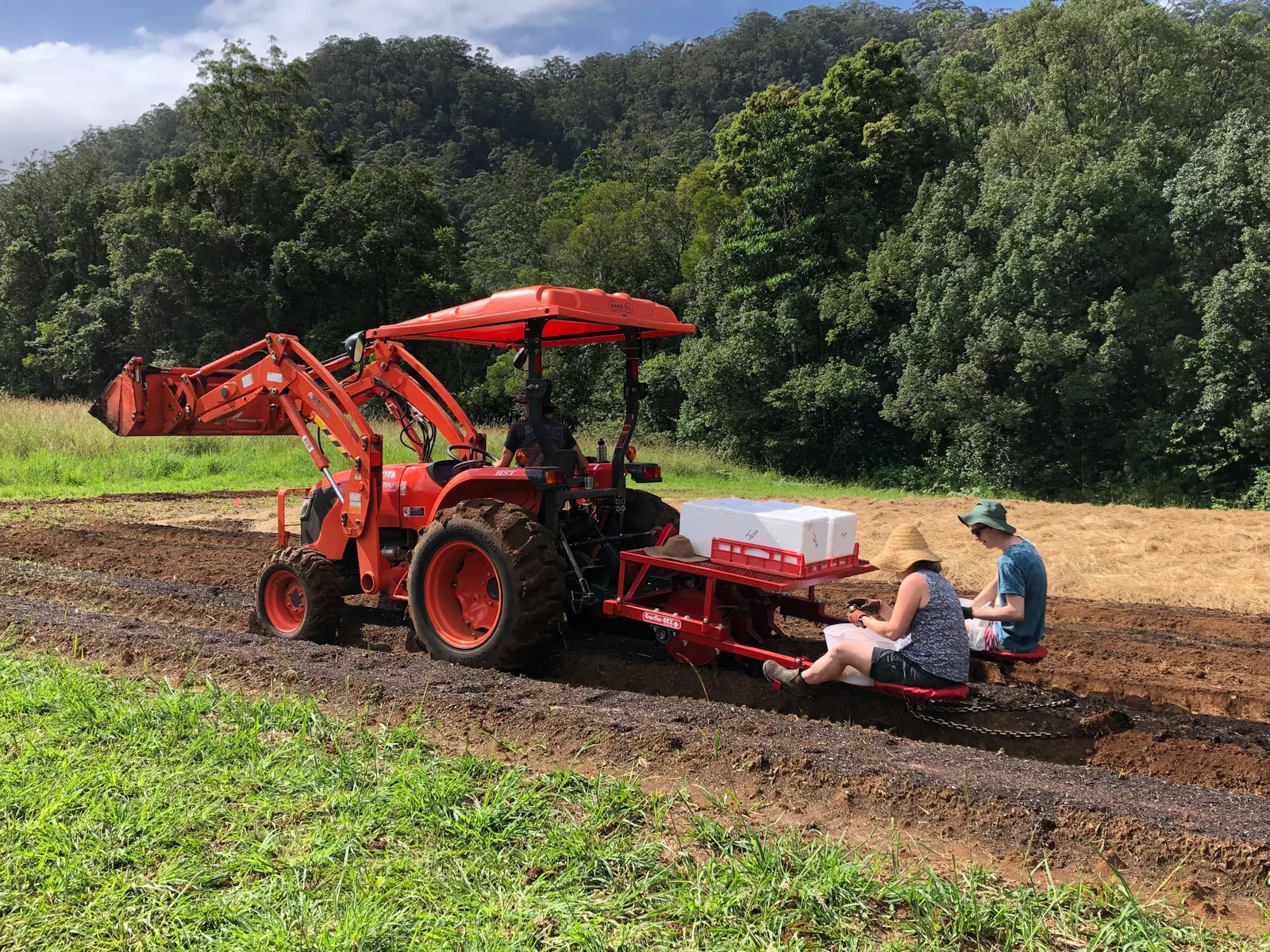
And a note on equipment, since this is an equipment company’s website. Nothing on this page requires a machine. Garlic has been grown well in Ontario for generations with a rake, a length of string and a garden fork, and under about an acre that is still the right answer — a planter takes many seasons to pay for itself at that scale and will not make your garlic any better. Equipment solves one problem: doing this over acres, inside a narrow October window, without a crew you cannot find. If that is not your problem, this page is the useful part of our site and you can ignore the rest.
If it is, the comparison against hand-planting includes the case where the machine saves you nothing, and the cost calculator runs your own numbers. Or call Doug on 519-379-6210 — we are in Dundalk, and we plant on the same calendar you do.
Keep reading
-
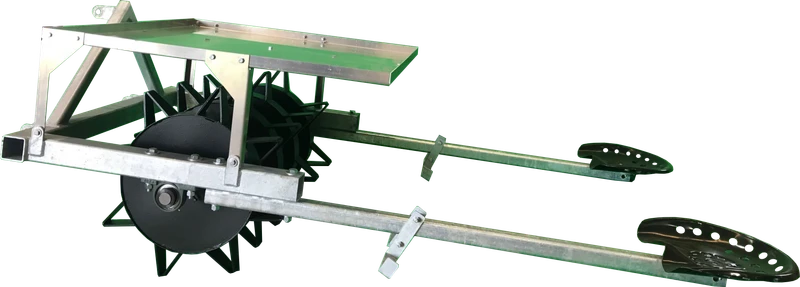 Planting onion sets with a garlic planter Sets and cloves are the same problem: a small bulb, root plate down, at a spacing. We make a dedicated onion wheel. Seed and transplants are a different machine entirely.
 - Planting tulips, hops and ginseng with a garlic planter A garlic planter is really a bulb, rhizome and large-seed planter. Six confirmed crops beyond garlic — plus the honest note that garlic is what it is optimised for.
-
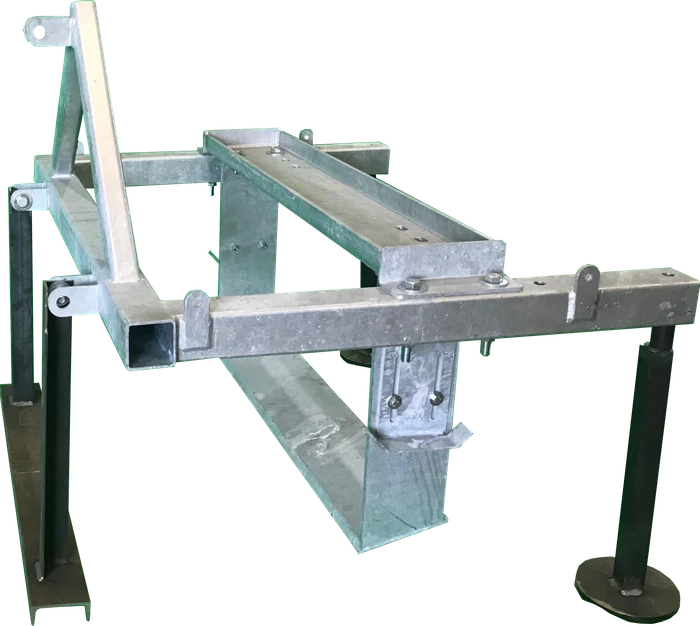 How to harvest garlic without breaking the necks Snapped necks are a soil problem, not a technique problem. Undercutting loosens the root mass so bulbs lift clean — and in light sand you may not need it at all.