How to harvest garlic without breaking the necks
Short answer: stop pulling. Lift the soil instead. Run a blade 6 to 8 inches below the bulb first, and the plant comes out of loosened ground with its neck, roots and wrappers intact instead of tearing off in your hand.
A snapped neck is not a sign that someone pulled too hard. It is a sign that the root mass was still anchored when they pulled at all.
Why pulling fails
When you pull a garlic plant, every bit of the force goes through the neck — that thin band of tissue between the top of the bulb and the base of the leaves. It is the weakest point in the plant and it is carrying the entire load.
Underneath, the bulb is held by a dense mat of roots that can run well past a foot down and grip harder the drier and firmer the ground is. That is a lot of anchorage against not much neck.
So one of three things happens:
- The neck snaps. The tops come away, the bulb stays in the ground. You either dig for it or you lose it. Either way you have paid to grow it.
- The bulb comes out damaged. Wrappers stripped, basal plate torn, a bruise you will not see today but will find in storage in November.
- It comes out clean. In light, moist soil, quite often it does.
The third outcome happens often enough — the sandy corner of the field, a wet week — to convince people the losses elsewhere are a technique problem. They are not. They are a soil condition problem, and they get worse in the dry Julys when the ground has set up hard.
Damage done at harvest also does not stay at harvest. A torn basal plate or bruised wrapper is an entry point for rot, and it shows up as storage loss in November on garlic you have already cured, trimmed and graded.
What an undercutter does instead
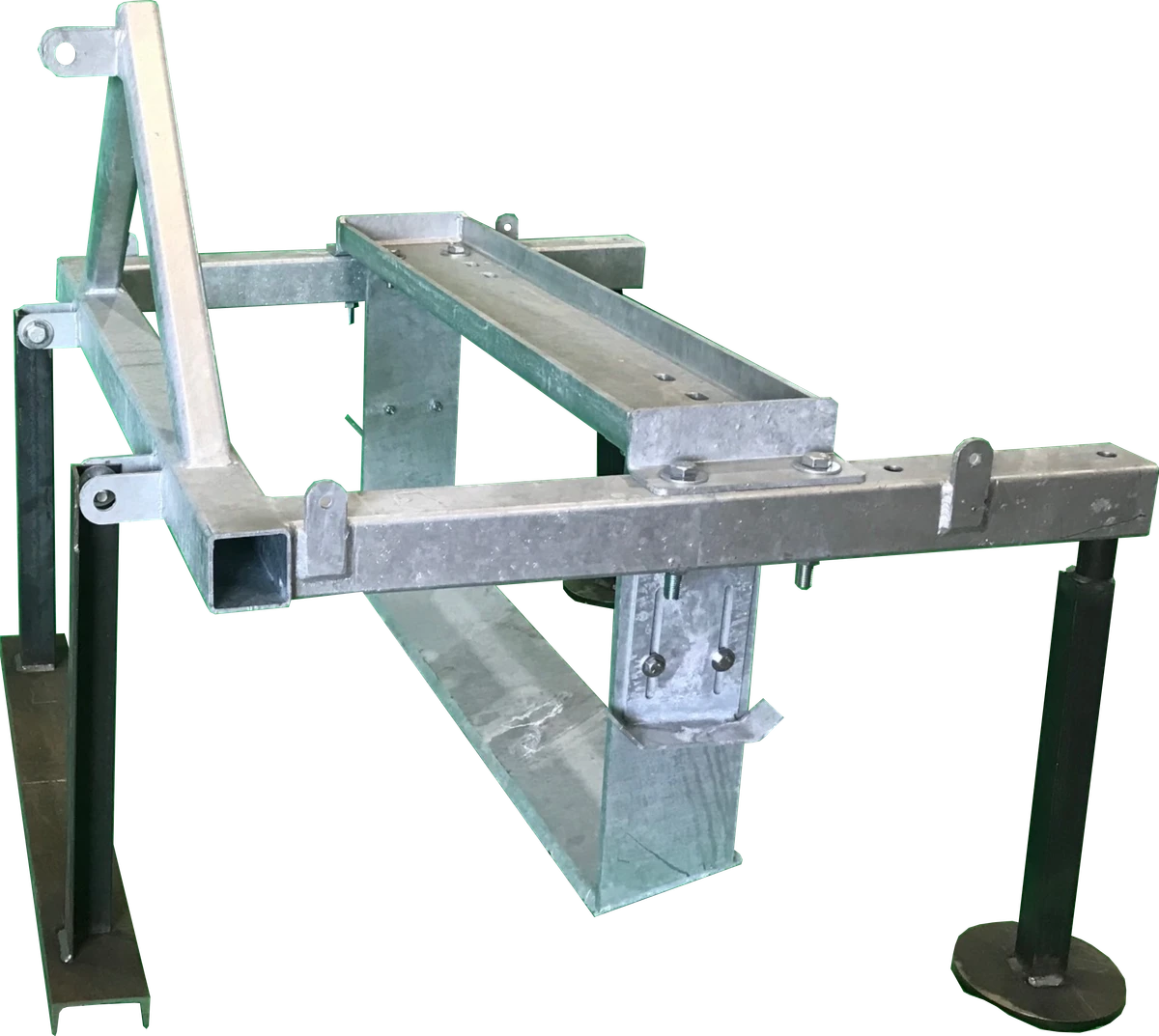
An undercutter is a horizontal blade on shanks, run under the bed on a toolbar behind the tractor. It slices through the soil beneath the root zone and lifts, breaking the grip of the roots without lifting the bulbs out of the ground.
Afterwards the plants are still standing in the row, but sitting in loosened soil. A worker walks the row and lifts each one out by hand with almost no force — neck, roots and wrappers intact.
It does not harvest the garlic. It makes harvesting possible without wrecking it.
The two we build differ in one thing only:
| UC-36 | UC-48 | |
|---|---|---|
| Blade width | 36″ | 48″ |
| Suits | Narrower beds, smaller tractors | Wider beds, one pass |
| Weight | ~100 lb | ~100 lb |
| Working depth | 6–8″ below the bulb | 6–8″ below the bulb |
| Minimum tractor | 40 HP | 40 HP |
Why 6 to 8 inches below the bulb
Not below the surface. Below the bulb.
That is the specification, and it is the number people get wrong. If your bulbs are sitting 2 to 3 inches down, the blade is running somewhere around 8 to 11 inches from the surface. Set the depth by the top of the soil rather than by where the crop actually is and you will run the blade through the bulbs.
The depth exists because of where the roots are. A shallow pass cuts the top of the root mass and leaves the rest anchored — the worst of both worlds, a tillage pass and snapped necks. Going under the whole root mass is what releases the plant.
It is also why the horsepower requirement is what it is. The undercutter weighs about 100 lb and needs 40 HP minimum — the load is draft, not weight. You are pulling a blade the width of a bed through undisturbed soil at depth, and that is the hardest thing a small tractor does all year. Heavy clay and dry conditions both want more than the minimum.
It mounts to the planter — which changes what you buy
This is the part that catches buyers out, so it is worth stating flatly.
The UC-36 and UC-48 are attachments for the PL-22, not standalone implements. You take the planting wheels off the PL-22 frame and fit the undercutter in their place. The planter’s frame and three-point hitch carry it.
Two consequences:
- You need a planter to run an undercutter. If you do not own a PL-22 — or an older Garlic-EEZ planter, which we still support and still supply parts for — an undercutter on its own is not usable equipment.
- If you already own one, this is a small upgrade. You are buying a blade assembly, not a second three-point implement. That is a meaningfully different purchase from what most growers assume when they start pricing harvest equipment.
Timing the pass
Undercut the same day you lift, or close to it. Plants left standing in loosened soil for days lose the benefit: bulbs sunburn where the soil has moved away from them, the row dries unevenly, and rain crusts the ground back around them.
Soil moisture matters as much as timing. Bone-dry ground takes more horsepower and shatters into clods; wet ground smears and sticks. Slightly moist soil is where the blade runs cleanest — often a day or two after a light rain.
When you don’t need one
Say it plainly: plenty of garlic gets harvested every year without an undercutter, and some of it should be.
Light sandy soil. If your ground is genuinely sandy and drains fast, plants often lift cleanly with a fork loosening the row. If you have harvested for years without breaking necks, your soil has answered this question. Don’t buy a machine for a problem you don’t have.
Very small plots. A few hundred row-feet is a garden fork and an afternoon. The fork does the same job — breaking the root grip before you lift — for almost nothing. The undercutter is about doing that over acres, in a window, without a crew doing it one plant at a time.
No planter, no plan to buy one. Because the UC mounts to the PL-22 frame, an undercutter is not the first machine you buy. It is the second.
Very heavy clay is an open question. We have not confirmed how the blade performs across the full range of clay conditions, so we are not going to claim anything here. Call and describe your ground before you order.
Working out whether it is worth it
Count what you actually lose. Walk a measured length of row at this year’s harvest and count snapped necks, bulbs left behind and torn wrappers, then multiply out to your acreage at your farm-gate price. That is the number the undercutter is competing against — not a percentage someone quoted you.
Specifications for both blades are on the harvesting equipment page: UC-36 and UC-48. If you want to talk through your soil and bed width before ordering, call Doug on 519-379-6210.
Keep reading
-
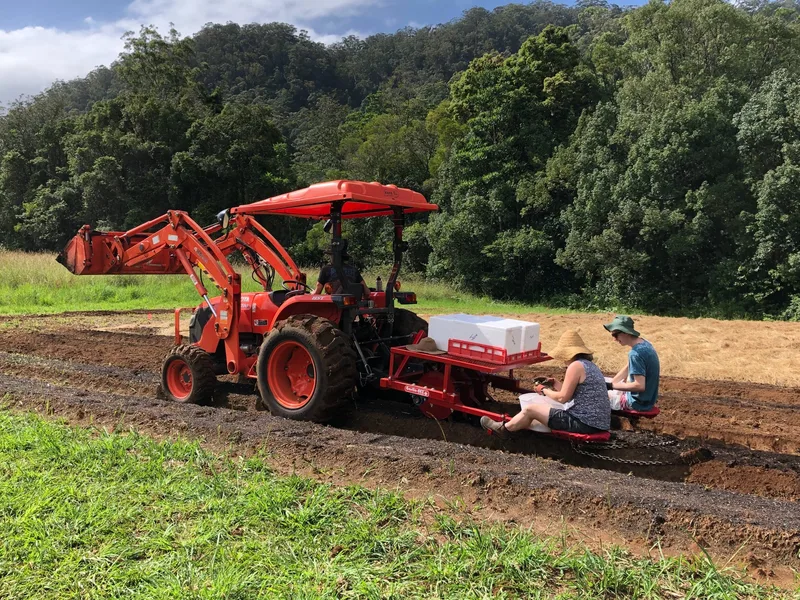 When to plant garlic in Ontario: a fall timeline Roughly two to four weeks before the ground freezes — mid-October to early November across most of the province. Here is the whole season, week by week.
 -
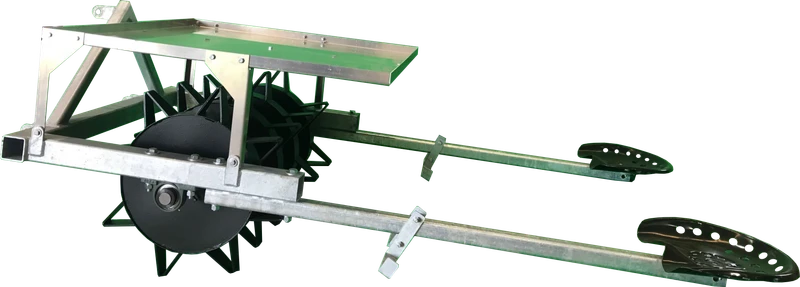 Planting onion sets with a garlic planter Sets and cloves are the same problem: a small bulb, root plate down, at a spacing. We make a dedicated onion wheel. Seed and transplants are a different machine entirely.
 - Planting tulips, hops and ginseng with a garlic planter A garlic planter is really a bulb, rhizome and large-seed planter. Six confirmed crops beyond garlic — plus the honest note that garlic is what it is optimised for.