Planting equipment
PL-22 Garlic Planter
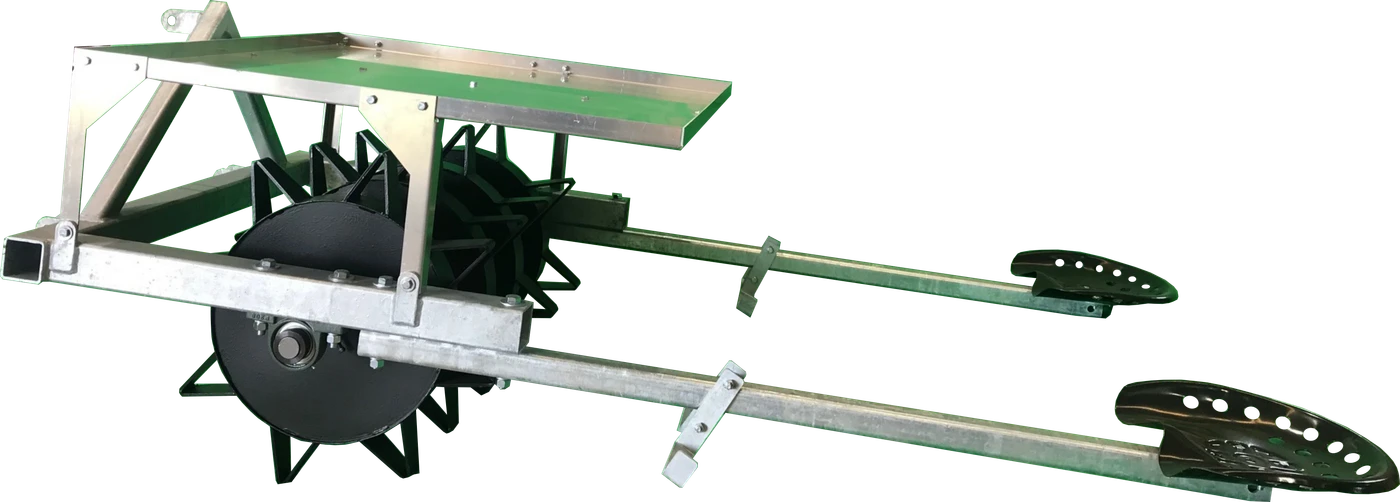
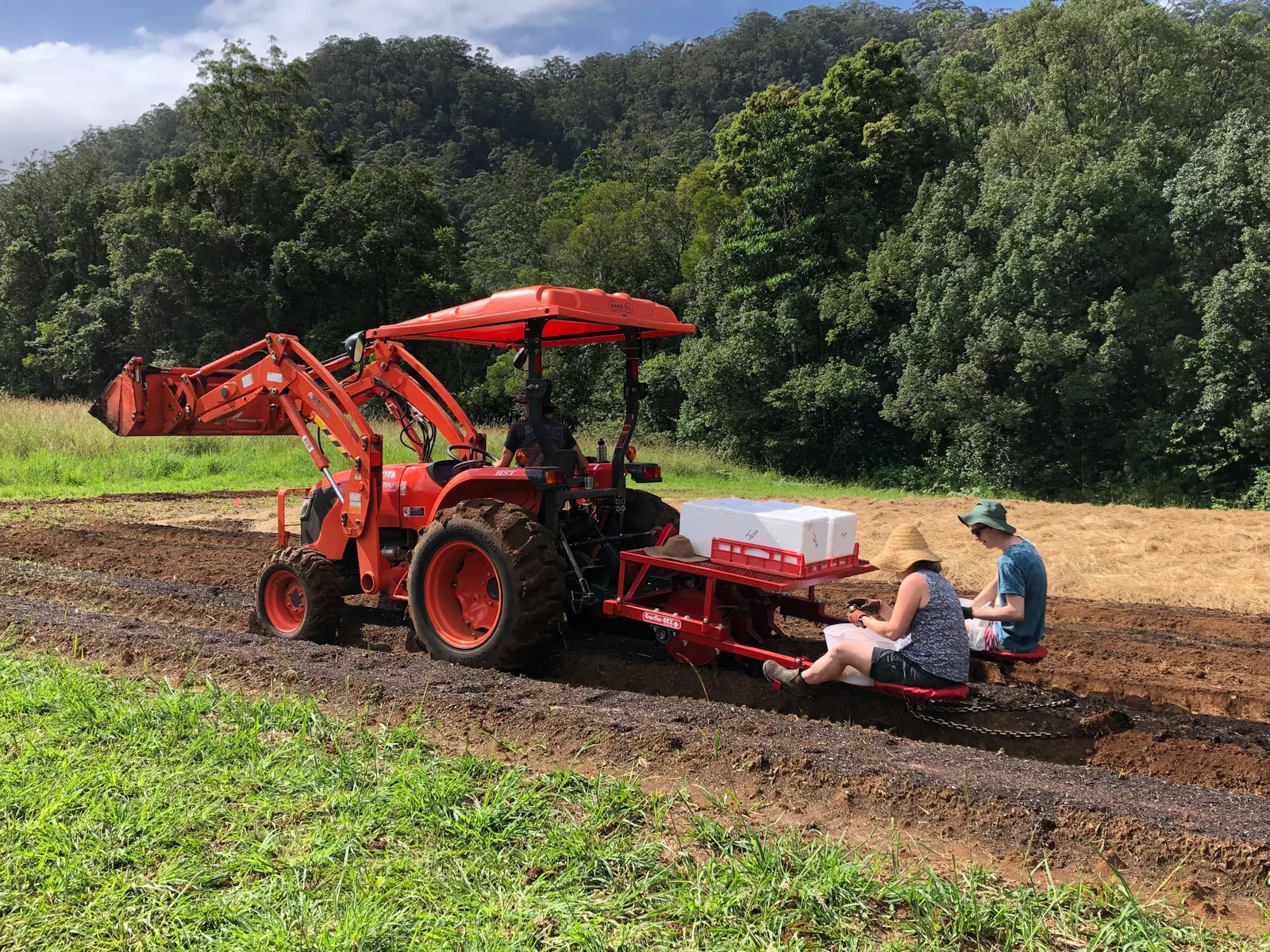
The PL-22 is a tractor-mounted, ride-on garlic planter built for growers planting roughly one to twenty acres. Two people ride it, each placing 600 to 800 cloves an hour — 1,200 to 1,600 an hour for the machine — with every clove set root-end down at your chosen spacing. It mounts to a standard Category 1 three-point hitch and is configured to your row spacing and bed width before it ships.
In the field
Specifications
Call 519-379-6210 for a price| Model | PL-22 |
|---|---|
| Type | Semi-automatic, ride-on, tractor-mounted |
| Hitch | Category 1 three-point hitch, standard |
| Planting rate | 1,200–1,600 cloves per hour with two riders |
| Assembled dimensions | 96" L × 48" W × 40" H |
| Shipping dimensions | 52" L × 48" W × 70" H |
| Weight | Approximately 500 lb |
| Row count | Configured to order |
| Row spacing | Row-to-row spacing is adjustable |
| Minimum tractor HP | No practical minimum for plantingAny tractor that can lift the planter on a Category 1 hitch will pull it. Horsepower only becomes a constraint at harvest — see the undercutters. |
| Operators | 2 riders600–800 cloves per rider per hour. |
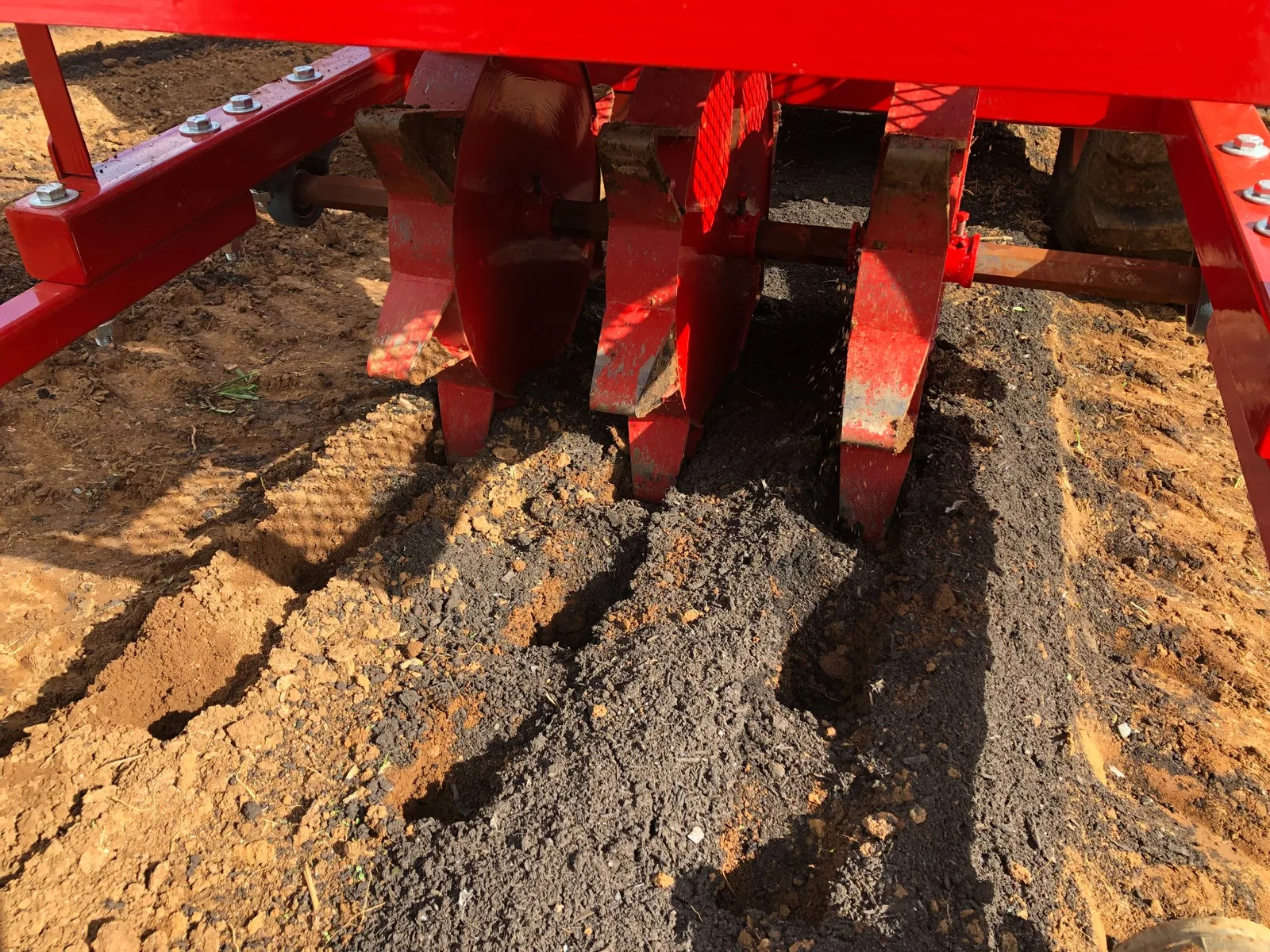
| In-row spacing | Set by wheel configurationWheels are made to your in-row spacing. Changing it later means a different set of wheels, not an adjustment. |
| Lead time | 1–2 weeks, plus shipping time |
| Warranty | 1 year |
| Shipping | Worldwide. Crated for freight. |
Need a figure that isn’t listed — horsepower, depth, lead time? Ask us and you’ll get a straight answer from the person who builds the machine.
Why semi-automatic
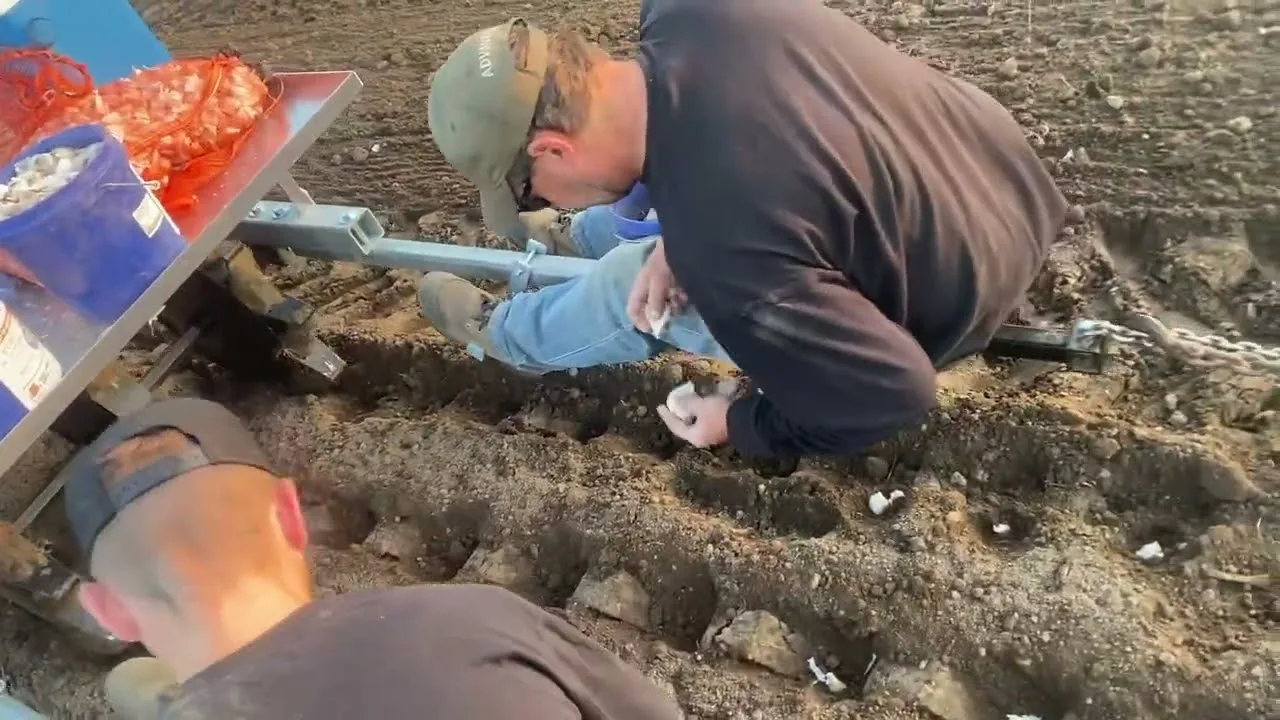
Fully automated cup and belt planters meter cloves quickly but cannot control orientation. A clove planted sideways or inverted still grows — it just grows a bent neck and a smaller, misshapen bulb that you pay to sort out at grading.
The PL-22 keeps a person in the seat doing the one task that resists automation. Everything else — furrow opening, spacing, closing, covering — is done by the machine. The result is a planter with no double-drops, no skips, and no misoriented cloves.
Configuring your machine
We build to your beds, not to a catalogue. Before we quote, we ask for:
-
Bed width and row spacing
How many rows across, and at what centres.
-
In-row spacing
Most garlic growers run four to eight inches.
-
Your tractor
Make, model and horsepower, and whether you have a quick hitch.
-
Acreage
How much you plant now, and whether you expect that to grow.
-
Crew size
How many people you can put on the machine.
One frame, two jobs
The same machine plants in October and harvests in July. Take the planting wheels off, fit an undercutter in their place, and it lifts the crop it put in the ground.
See it work
Tell us about your beds
Get a quote
Send us your row spacing, bed width, tractor horsepower and how many acres you plant. We will tell you exactly how we would configure a machine for you — and if we are not the right fit, we will say so.