What happens if you plant garlic upside down?
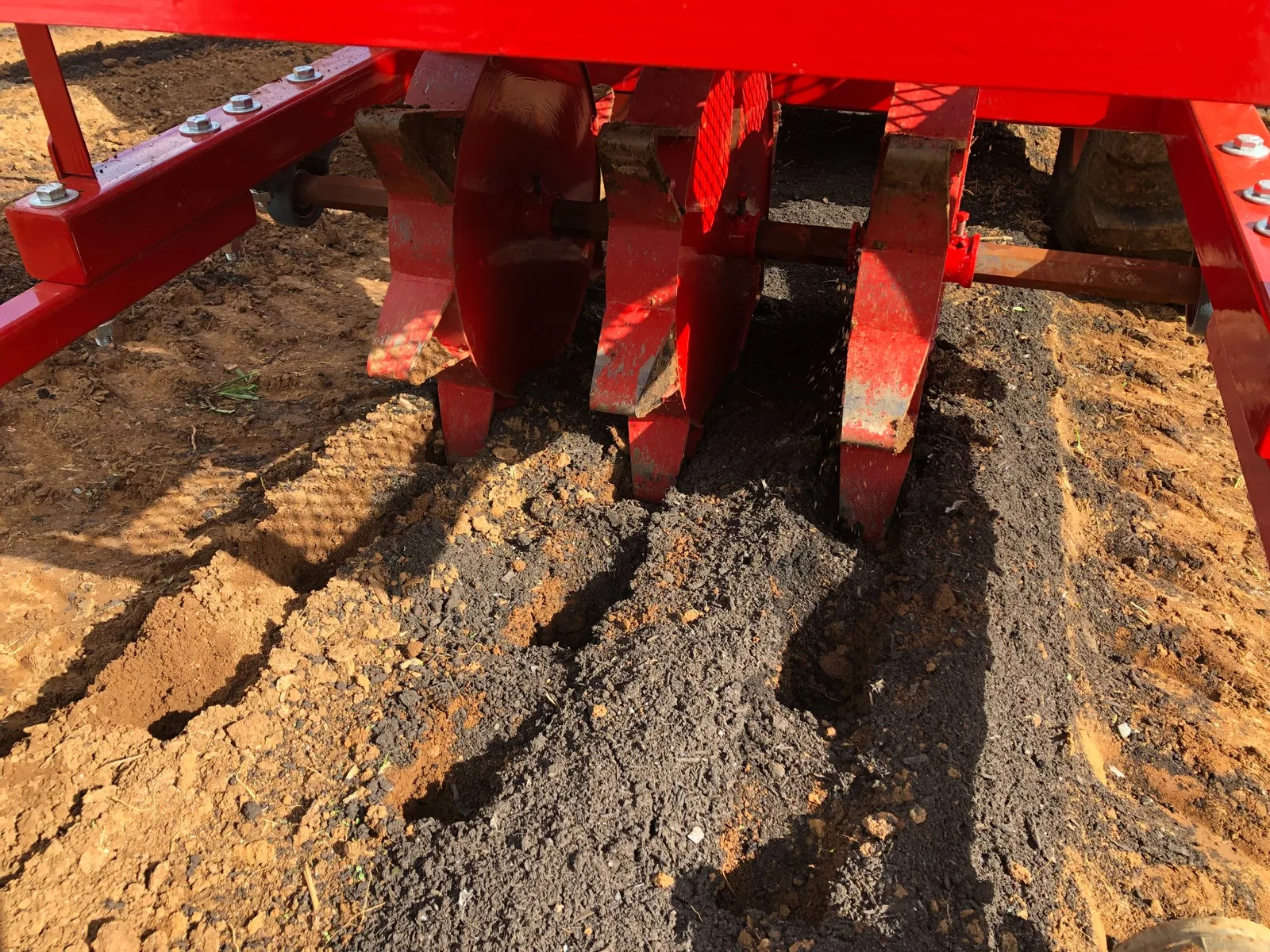
Short answer: it still grows. That is the problem. An inverted clove sends its shoot down, turns, and works its way back up to the surface, and it arrives late, weaker and crooked. You get a bent neck and a smaller, misshapen bulb — and ten months later you pay someone to cull it at grading.
Garlic does not fail loudly when you plant it wrong. It fails quietly, in July, in the grading shed, on a crop you have already spent a full season paying for.
What is actually happening underground
A clove has a flat, slightly rough basal plate at one end and a pointed tip at the other. The roots come out of the basal plate. The shoot comes out of the tip. Both are geotropic — roots grow down, shoots grow up — so a clove will eventually sort itself out no matter which way you bury it.
“Eventually” is the expensive word.
| Orientation | What happens | Result |
|---|---|---|
| Root-end down, tip up | Direct root and shoot path | Straight neck, full-size bulb |
| Sideways | Shoot turns roughly 90° to reach the surface | Slight curve, modest size loss |
| Fully inverted | Shoot grows down, reverses, climbs past the clove | Bent neck, smaller misshapen bulb, often late |
An inverted clove spends stored energy on a detour instead of on early root establishment. It emerges later than its neighbours in the same row, which means it is behind on the spring growth that sizes the bulb — and in garlic, leaf number in spring sets bulb size at harvest. Falling a week behind in April is not a week you get back.
Two things follow from that, and both cost money.
The neck is bent. Hardneck garlic is largely sold and stored by the neck — bunched, braided, hung, trimmed to a consistent length. A neck that leaves the bulb at an angle does not trim square, does not bunch tidily and does not hang well. Seed buyers in particular will not take it.
The bulb is misshapen. Cloves size unevenly around an off-centre stem. That bulb is not a seed bulb, it is often not a table bulb at grade, and it takes just as long to harvest, cure, trim and handle as a good one. You carry the full cost of the plant and recover a fraction of the price.
Why the loss is invisible on planting day
Here is the part that makes this hard to reason about. On planting day, orientation costs you nothing. The rows go in, the field looks the same, and the machine that placed cloves any-which-way looks exactly as productive as the one that placed them carefully.
The bill arrives at grading. It arrives as a percentage — a share of bulbs downgraded out of seed grade into table grade, or out of table grade into the cull pile — and it never gets attributed back to the twenty minutes in October that caused it, because nobody is keeping records that connect the two.
That is why it almost never appears in an equipment comparison. It is a real cost with no line on the invoice.
Why fully automated planters can’t fix this
A fully automated planter meters cloves mechanically — cups on a chain, or a belt, or a disc — picking up a clove and dropping it into the furrow. The mechanism controls when a clove is released. It does not control how it lands.
Garlic makes this worse than it is for most crops. Cloves are irregular: crescent- shaped, asymmetric, different sizes from the same bulb, different sizes between varieties, sometimes with skin attached and sometimes not. There is no consistent geometry for a machine to grip against. So an automated planter also produces the other two failure modes: double-drops (two cloves in one spot, competing) and skips (an empty station in the row, which is yield you paid for in seed and did not plant).
Vision-and-robotics orientation exists in research and in some high-value bulb crops. It is not on the market at a price a two-to-twenty-acre garlic grower is going to pay.
To be fair to automated planters
If you are planting a large enough acreage, an automated planter is the right machine, and anyone telling you otherwise is selling you something.
At scale the arithmetic inverts. Orientation loss is a percentage of yield; labour is an absolute quantity of hours you have to physically find. Past a certain acreage there is no crew in the county large enough to place cloves by hand at any price, so the comparison is not “careful planting versus fast planting” — it is “fast planting versus not growing the crop.” At that point you take the orientation loss knowingly, you plant a little denser to cover skips, and you build a grading line to sort the rest.
The place where hand-placed orientation wins is the middle: enough acreage that hand planting is a genuine burden, not so much that you cannot staff a semi-automatic machine. Roughly one to twenty acres. That is the band the PL-22 is built for, and it is not a coincidence — it is the band where a person can still place every clove and the machine can still do everything else.
What a semi-automatic planter actually automates
This is the trade the PL-22 makes, stated plainly.
The machine opens the furrow, holds the row spacing, meters the in-row spacing through the planting wheels, and closes the row behind. Two people ride it, seated, and each places 600 to 800 cloves an hour root-end down — 1,200 to 1,600 an hour for the machine.
What you get is no double-drops, no skips, and no upside-down cloves. What you give up is the raw hourly throughput of a machine that doesn’t care which way up a clove lands.
The seated part matters more than it sounds. Hand-planting rates are quoted from the first hour, not the sixth — and orientation is the first thing that goes when people are cold, kneeling and tired at four o’clock. A rate that holds all day is also an accuracy that holds all day.
Where this doesn’t apply
If you are planting a garden bed, plant by hand and take your time. You will beat any machine on orientation and you do not need equipment to do it. Under about an acre, buying a planter is not the answer — the hand-planting comparison works through where that line sits.
If your bulbs are already grading poorly, orientation may not be your problem. Undersized bulbs come from thin seed stock, late planting, spring nitrogen shortfalls, weed competition and drought long before they come from inverted cloves. Look at your whole crop before you buy a machine to fix one variable. If your rows are full of bent-necked bulbs, that is an orientation signal. If they are uniformly small and straight-necked, it is not.
Questions about how the machine handles your seed grade or your spacing: 519-379-6210, or the FAQ.
Keep reading
-
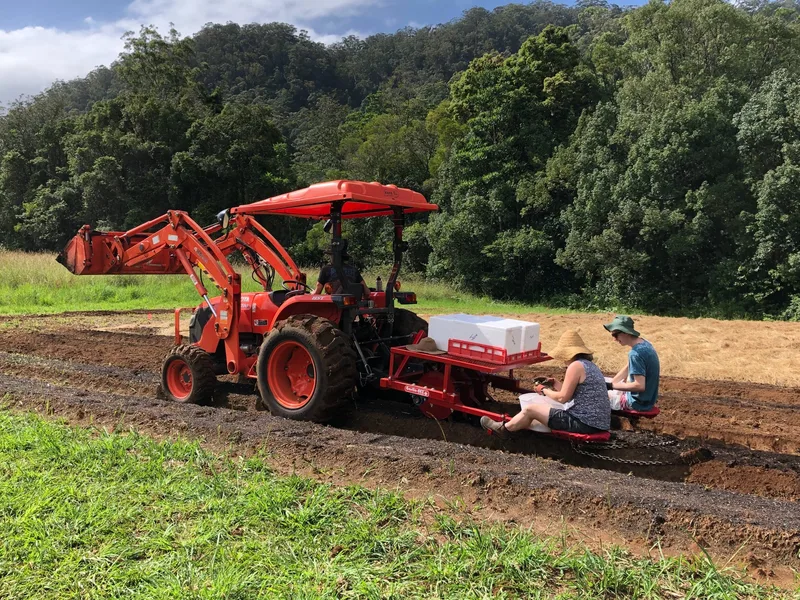 When to plant garlic in Ontario: a fall timeline Roughly two to four weeks before the ground freezes — mid-October to early November across most of the province. Here is the whole season, week by week.
 -
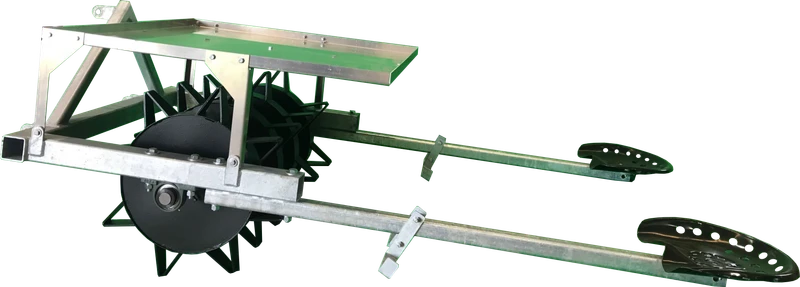 Planting onion sets with a garlic planter Sets and cloves are the same problem: a small bulb, root plate down, at a spacing. We make a dedicated onion wheel. Seed and transplants are a different machine entirely.
 - Planting tulips, hops and ginseng with a garlic planter A garlic planter is really a bulb, rhizome and large-seed planter. Six confirmed crops beyond garlic — plus the honest note that garlic is what it is optimised for.