Weed control in garlic: mulch, cultivation and the stale seedbed
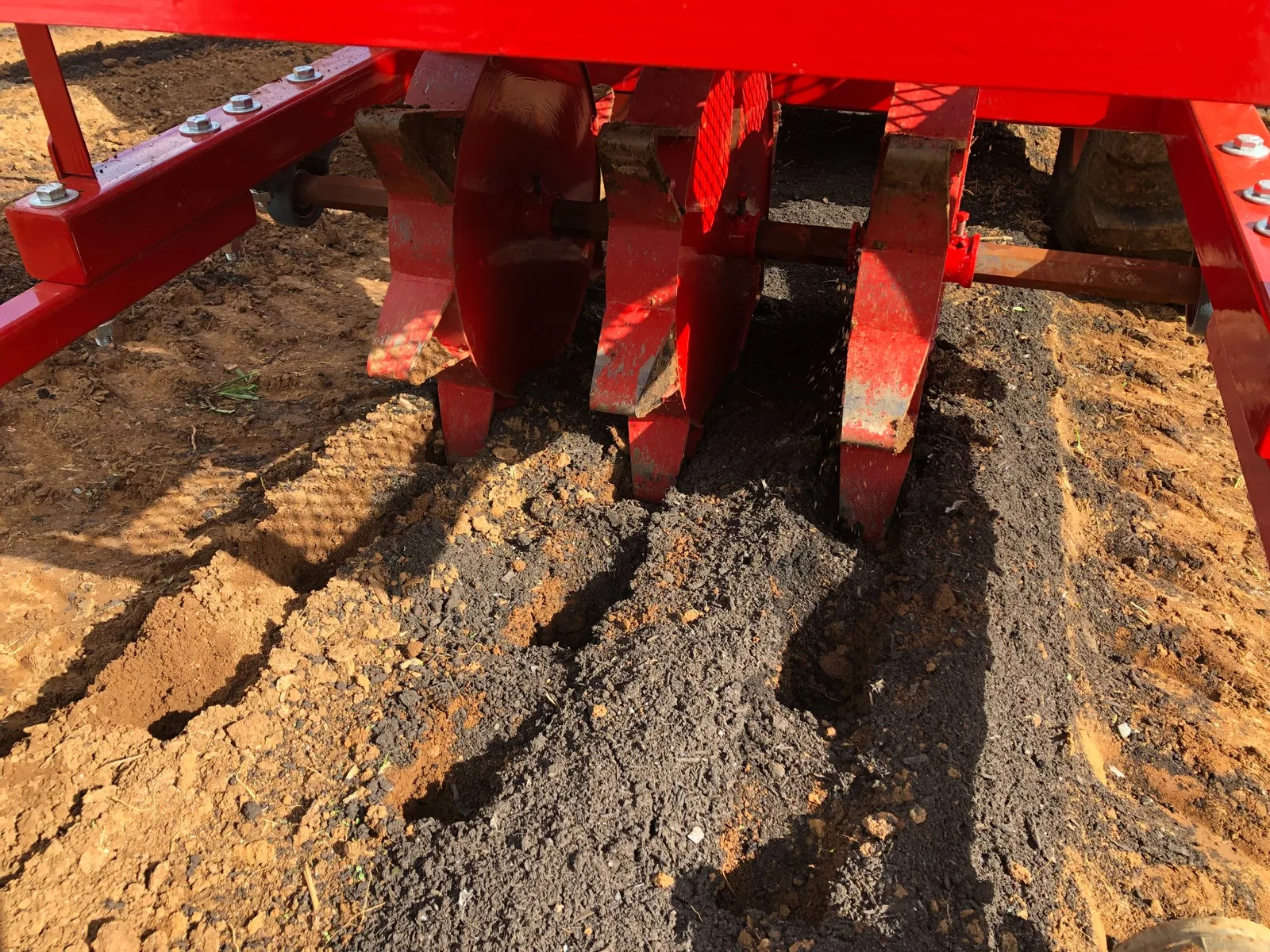
Short answer: there are three practical strategies — mulch, repeated shallow cultivation, and a stale seedbed before planting — and most successful growers run a combination rather than one. Which combination is available to you is largely decided by your row spacing, which is decided months earlier, when the crop goes in.
That last clause is the part this article exists for. Weed control in garlic is usually discussed as a summer problem. It is really a planting-day decision.
Why garlic is so bad at defending itself
Garlic occupies the ground for eight to nine months and spends most of it as an upright, narrow-leaved plant that never closes a canopy. It shades almost nothing. Compare that with squash or potatoes, which shut the inter-row down by midsummer and largely weed themselves after that.
Two consequences follow. Weed pressure runs the whole season, including a spring flush that arrives while garlic is still small and a late flush after scaping. And competition costs you bulb size directly — garlic competes badly for nitrogen and moisture, and the losses show up as grade rather than as visible crop failure, which makes them easy to underestimate until you weigh the crop.
The critical window is spring: from the point when soil warms until the crop is well into bulbing. Weeds that establish in that stretch cost the most. Weeds that come up after the bulb has largely sized are a harvest nuisance rather than a yield problem.
The three strategies compared
| Stale seedbed | Mulch | Cultivation | |
|---|---|---|---|
| When it happens | Weeks before planting | At or just after planting | Repeatedly, spring through early summer |
| What it does | Germinates the surface weed seed bank, then kills the flush before the crop goes in | Physically excludes light; also moderates winter temperature and holds moisture | Cuts or buries weeds between and within rows |
| Main cost | Time and a tillage pass or two in a busy autumn | Material and the labour to apply and remove it | Repeat passes, and every pass is timing-sensitive |
| Main risk | Achieves nothing if the weather does not cooperate | Slug and rodent habitat; can delay soil warming; removal is a real job | Root pruning if you go too deep or too close; smearing in wet soil |
| Row spacing needed | Any | Any | Wide enough for the tool to pass |
| Scales to acreage? | Yes, cheaply | Poorly — material and labour scale linearly | Yes, this is what mechanisation is for |
Stale seedbed
Prepare the ground early, let the surface weed seed flush germinate, then destroy that flush shallowly — with a very shallow tillage pass or a flame weeder — immediately before planting. Depth discipline is the whole trick: go deep and you simply bring up the next cohort of seed and start again.
It is the cheapest of the three and the one most often skipped, because in October the planting window is already tight and a grower has to choose between preparing properly and getting the crop in.
Mulch
Straw is the traditional choice in Ontario garlic and it does two jobs at once: suppressing weeds and buffering the freeze-thaw cycles that heave shallow-planted cloves. Growers who mulch heavily often report the weed benefit as secondary to the winter protection.
The honest costs are the material, the labour to spread it, the labour to pull it back in spring if you are pulling it back, the weed seed that arrives in poor-quality straw, and the habitat it provides for slugs and voles. It also slows spring soil warming, which can be an advantage or a problem depending on your site.
Mulch scales badly. It is excellent on a half-acre and it is a serious materials and handling problem at ten. Where the walls appear as acreage grows is covered in scaling up garlic.
Cultivation
Repeated shallow mechanical cultivation, starting as soon as the crop is established enough to be seen and repeated on the white-thread stage of each weed flush, is what most growers move to as acreage climbs.
The rules are the same as in any row crop: go early, go shallow, and go often. Garlic roots run shallow and wide, and a cultivator run deep or tight will prune roots you needed. Nothing you do later in the season recovers what a careless June pass costs.
And cultivation only reaches between the rows. In-row weeds still come out by hand, or not at all, which is why in-row spacing and cultivation strategy are not independent choices.
How row spacing decides what is mechanically possible
This is the constraint most first-time garlic growers meet the hard way.
Every between-row tool has a minimum working width plus clearance on each side, and it has to travel down the field without pruning roots or burying plants. Narrow rows put a lot of plants in an acre and leave nothing for a tool to work in.
| Row centres | What can realistically pass between rows |
|---|---|
| 6″ | Hand tools only. No wheeled or tractor cultivation |
| 8″ to 10″ | A narrow wheel hoe at best, and only with a straight, evenly planted row |
| 12″ to 14″ | Wheel hoe or a narrow tine weeder; tractor cultivation is tight |
| 18″ to 24″ | Tractor-mounted cultivation becomes practical |
| 30″ and wider | Conventional row-crop cultivation, straightforward |
Read that table against the cloves-per-acre arithmetic in the spacing guide and the trade is stark. At 6″ × 6″ an acre holds 174,240 cloves and you will be weeding it by hand or under mulch. At 6″ × 24″ the same acre holds 43,560 — a quarter of the plants — and a tractor can cultivate it all season. Most growers settle in between and accept a mixture of methods.
One more thing to check: your wheel track. Row centres also have to accommodate the tyres of whatever drives down the field, not just the tool hanging off it. Measure your tractor before you commit to a bed layout, because that measurement is not adjustable.
Where the planter comes into it
Two things about the PL-22 are directly relevant, and both were covered in the spacing guide because they matter more than once.
Row-to-row spacing is adjustable on the machine. If you decide after a season that you need another few inches to get a cultivator through, that is a change you can make.
In-row spacing is not. It is set by the planting wheels, which are made to your spacing, and changing it later means a different set of wheels. So if your weed plan depends on a specific in-row spacing, settle it before you order rather than after.
Beyond that: a machine that places every clove at a consistent depth and interval gives you a straighter, more even row than a hand crew working in cold mud, and a straight even row is what makes close cultivation survivable. That is a real benefit and a modest one. It is not a reason to buy a planter.
What we do not sell, and what we do not know
Being direct about the boundaries here:
- We do not build cultivators, and we do not sell mulch. Nothing on this site does weed control. The equipment we make plants the crop and lifts it.
- The undercutter is not a weeding tool. The UC-36 and UC-48 run a blade 6 to 8 inches below the bulb at harvest to lift the bed. Running one mid-season would destroy your crop. It gets asked, so it is worth stating.
- We publish no herbicide guidance. Registered products, rates and pre-harvest intervals differ by jurisdiction and change annually. Get that from your provincial crop protection guide and your own label, never from an equipment manufacturer’s blog.
- The agronomy above is general knowledge, not our trial data. We have run no weed trials. Which flush matters most on your farm depends on your weed spectrum and your soil, and a local grower with records will beat this page.
- When this does not apply: very small plantings. Under about a quarter acre, the strategy question is largely moot — you will mulch it and hand-weed it, and that is the right answer.
If you are laying out beds for the first time, work backwards: pick the weeding tool you will actually own, measure it, measure your tractor, and let those set your row centres. Then ring 519-379-6210 with those numbers and we will build the planter to them.
Keep reading
-
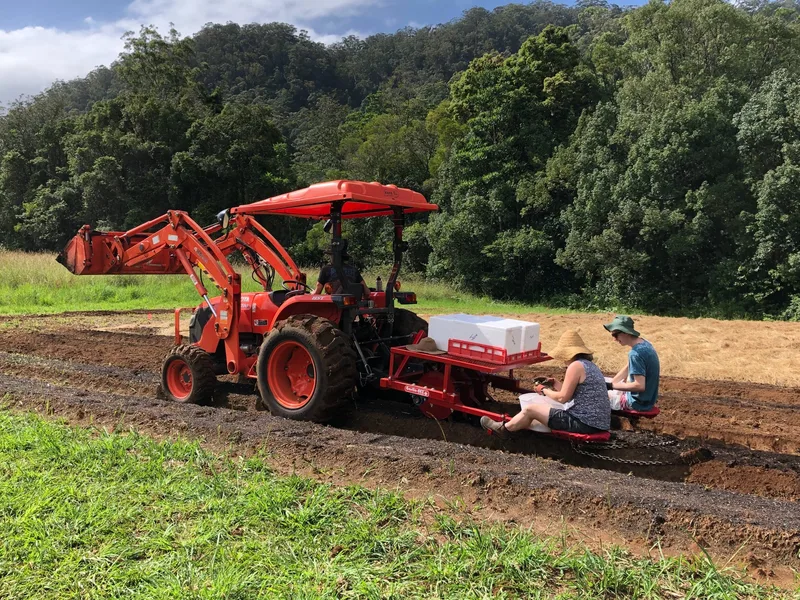 When to plant garlic in Ontario: a fall timeline Roughly two to four weeks before the ground freezes — mid-October to early November across most of the province. Here is the whole season, week by week.
 -
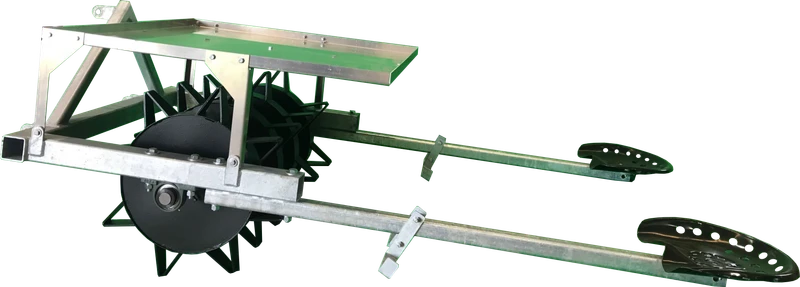 Planting onion sets with a garlic planter Sets and cloves are the same problem: a small bulb, root plate down, at a spacing. We make a dedicated onion wheel. Seed and transplants are a different machine entirely.
 - Planting tulips, hops and ginseng with a garlic planter A garlic planter is really a bulb, rhizome and large-seed planter. Six confirmed crops beyond garlic — plus the honest note that garlic is what it is optimised for.