Choosing seed garlic: size, sourcing and how much you need
Short answer: plant your largest cloves from your largest, healthiest, fully-wrappered bulbs. Clove size is the strongest single predictor of next year’s bulb size, which means the cheapest decision you can make in September is also the most expensive one you will make all year.
Garlic is vegetatively propagated. What you plant is a piece of last year’s crop, and it carries last year’s genetics, last year’s vigour and last year’s diseases forward directly. There is no seed company standing between your mistakes and next season.
Big cloves make big bulbs
The clove is a storage organ. Everything the plant does between October and the first warm week of April runs on the reserves inside it — root growth, overwintering, the early leaves. A bigger clove starts spring with more leaf area, and since bulb size is set by the leaves the plant makes in April and May, it finishes bigger.
This compounds. Plant your small cloves and next year’s crop is smaller on average, which gives you smaller seed again. Three seasons of grading downwards and a variety that used to make good bulbs is visibly declining, and growers usually blame the variety.
Two things follow from that.
Grade your seed at trimming, not at planting. When the cured crop is in front of you in August, that is when you decide what goes in the seed bin. If you wait until October you will be selecting from whatever the market did not want, which is exactly the wrong selection pressure.
The very biggest bulbs are worth more as seed than as food. That is uncomfortable — they are also the bulbs the market pays most for — but a jumbo bulb sold once is money, and a jumbo bulb planted is next year’s jumbo bulbs.
What to keep and what to reject
Keep:
- Large bulbs, well-filled, with all wrappers intact.
- A clean, unbroken basal plate. Turn the bulb over and look at it. This is where basal rot shows.
- Firm cloves. No give under thumb pressure.
- Typical clove count for the variety. A hardneck bulb that suddenly has fourteen small cloves instead of six large ones is telling you something.
Reject, without sentiment:
- Anything soft, mouldy, discoloured or weeping.
- Split wrappers, exposed cloves.
- Bulbs from a patch that struggled — poor drainage, stunted plants, yellowing that wasn’t nitrogen.
- Small cloves off the inside of a bulb. They take full-price row space and grow small bulbs.
- Bulbs with damaged basal plates from harvest. That damage is an infection route and it travels with the clove.
Crack seed bulbs one to two days before planting, not weeks ahead — an exposed basal plate dries out. Storage conditions between August and October matter too, and they differ from eating stock; that is covered in curing and storing garlic.
Saving your own versus buying in
Saving your own is the default, and it is the right default. Your stock is already adapted to your soil, your climate and your management, and after several seasons on the same farm most growers find it outperforms bought-in stock of the same variety. It is also free in cash terms, which is not nothing when seed garlic is the single largest input cost in this crop.
The catch is that everything else also travels with it.
Bring in new stock when:
- You are seeing disease. White rot, basal rot, or bloat nematode in your field means your own bulbs are a vector. Buy clean stock and put it on clean ground, and expect to rotate hard.
- You are expanding faster than your own crop can supply. Going from one acre to three means you need roughly three times the seed, and holding back that much of a one-acre crop leaves you almost nothing to sell.
- You want a new variety. Obviously — but quarantine it. New stock goes in its own block, well away from your main crop, for at least one season.
- Your stock is visibly declining despite good grading and good rotation.
When you buy, ask the seller directly: where it was grown, whether it has been tested for bloat nematode, and whether the field it came from has a white rot history. A supplier who cannot answer those questions is selling you a risk with a bulb attached. Buying “seed garlic” that is actually culinary garlic sorted for size is a common and expensive mistake.
How much seed does an acre take?
This is arithmetic, and it is worth doing before you order rather than in October.
Start with clove count. An acre is 6,272,640 square inches, so:
cloves per acre = 6,272,640 ÷ (in-row spacing × between-row spacing)| Spacing | Cloves per acre |
|---|---|
| 4″ × 6″ | 261,360 |
| 6″ × 6″ | 174,240 |
| 6″ × 8″ | 130,680 |
| 8″ × 8″ | 98,010 |
The full method, including bed layouts with pathways, is in garlic cloves per acre.
Now convert to weight, and here is where published tables stop being useful. Cloves per pound swings enormously — by variety, and by the grade of the bulbs you crack. A big-cloved Porcelain and a small-cloved softneck are not in the same range, and your own seed grade moves the number more than the variety name does.
So measure your own. Crack out one pound of your actual seed stock, count the plantable cloves, discard the tiny inner ones you would not plant anyway, and use that count.
Worked example, using a measured 50 plantable cloves per pound at 6″ × 6″:
174,240 cloves ÷ 50 cloves per pound = 3,485 lb of seed per acreChange the count and the answer moves a long way. At 40 cloves per pound the same acre needs 4,356 lb; at 65 it needs 2,681 lb. That spread is why you weigh a sample instead of trusting a chart — including this one.
Add 5 to 10 percent for cracking losses, cloves you reject at the table, and the rows that need replanting.
Then work out what fraction of your own crop that represents. Divide the seed weight you need by the weight you actually harvested off that ground last year. That ratio tells you whether you can supply your own expansion or need to buy the difference, and it is the number most growers discover too late.
Where this connects to the rest of the farm
Two honest notes.
Seed quality is not an equipment problem. No machine on this site improves your seed, and if your bulbs are getting smaller year over year, a planter will simply plant smaller cloves faster. Fix the grading and the rotation first.
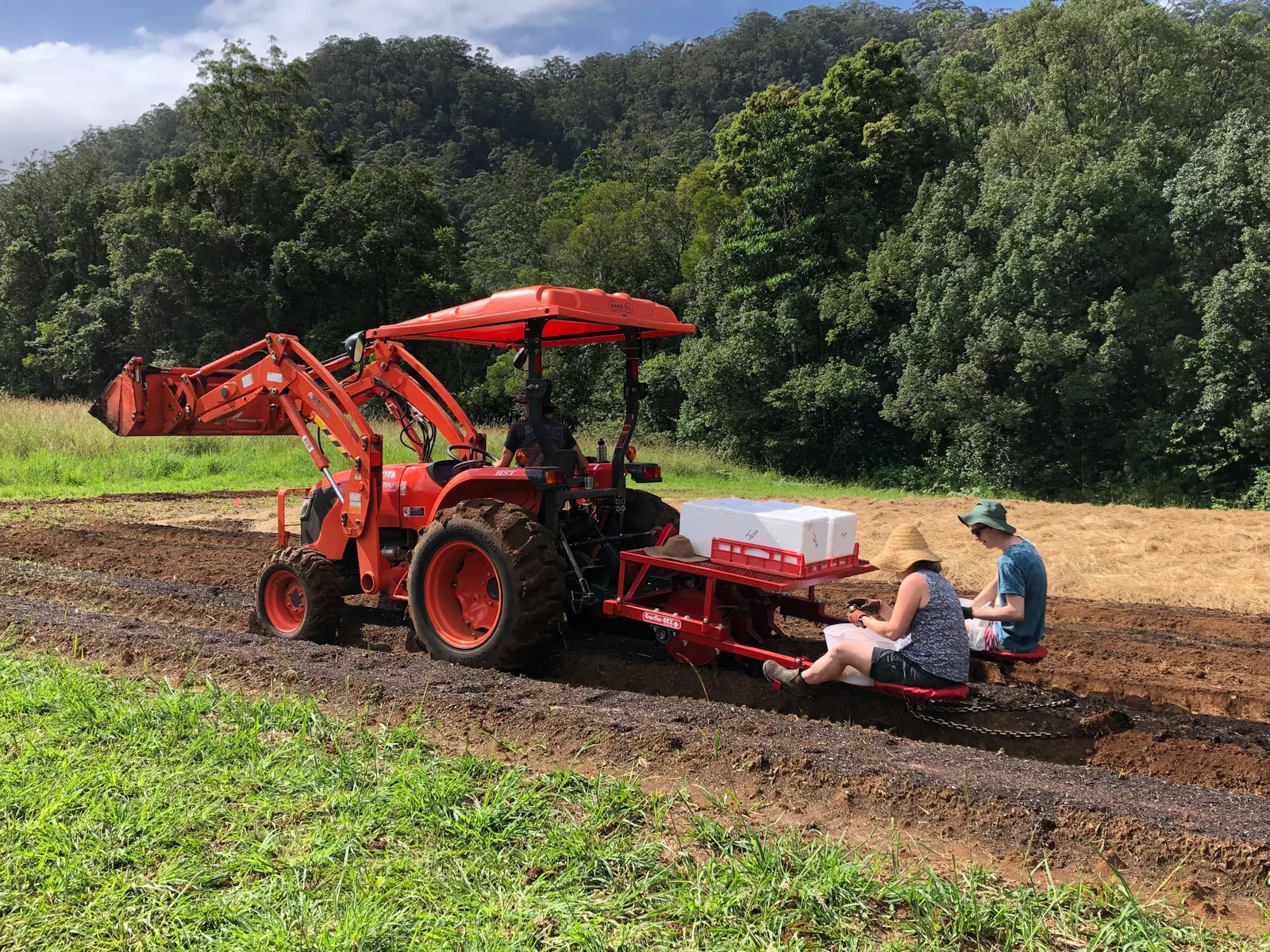
Uniform seed makes mechanised planting work better, though. A ride-on planter is loaded with cloves that a person picks up and places, and wildly variable clove size slows that down and produces uneven emergence regardless of how it is planted. Grading seed to a consistent size is worth doing whether you plant by hand or on the PL-22.
Which variety you are saving in the first place changes the clove count, the storage life and the number of cloves you get per bulb — see hardneck versus softneck.
Keep reading
-
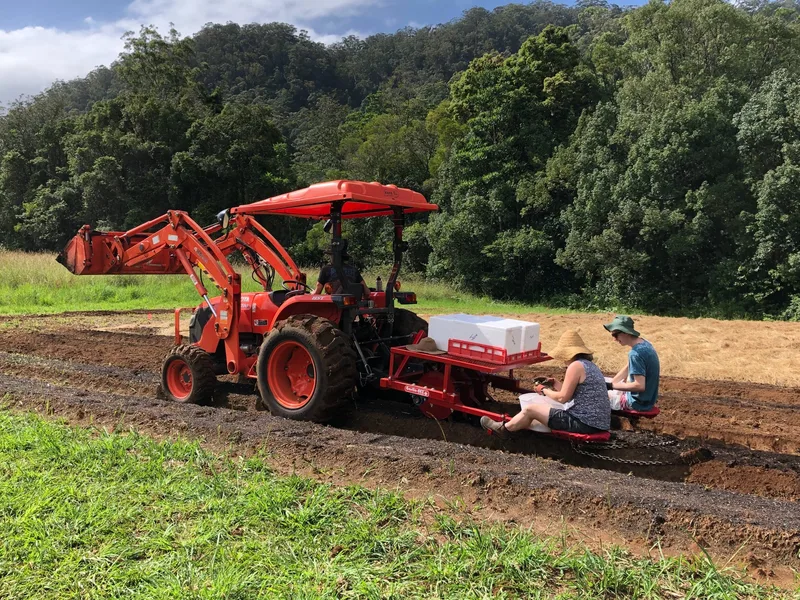 When to plant garlic in Ontario: a fall timeline Roughly two to four weeks before the ground freezes — mid-October to early November across most of the province. Here is the whole season, week by week.
 -
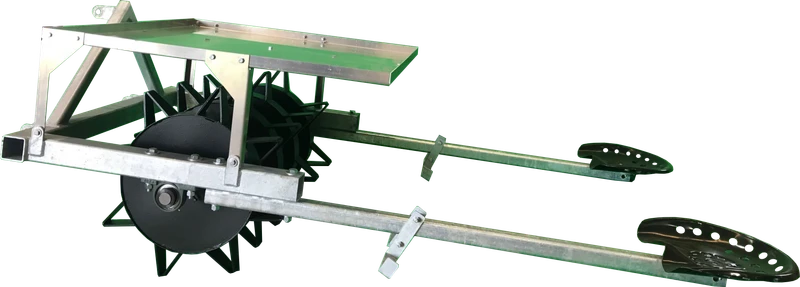 Planting onion sets with a garlic planter Sets and cloves are the same problem: a small bulb, root plate down, at a spacing. We make a dedicated onion wheel. Seed and transplants are a different machine entirely.
 - Planting tulips, hops and ginseng with a garlic planter A garlic planter is really a bulb, rhizome and large-seed planter. Six confirmed crops beyond garlic — plus the honest note that garlic is what it is optimised for.